

Detailed case studies

Different products need different affiliate engines.

Tahmir AI needed affiliates to create sales. Screlio needed the right partner audience in place before launch. We designed each channel around that specific job.

Tahmir AI
1,000+

affiliate-attributed product sales generated

Campaign outcome supplied for this case study. No revenue or timeframe claim is implied.

Case 01 / Affiliate sales engine

How Tahmir AI turned a technical product story into 1,000+ affiliate sales.

Tahmir AI converts approved source pages—HTML, ZIP exports, AI-built frontends, and reference pages—into editable WordPress drafts. The product solves a sharp problem, but the affiliate motion only works when partners can explain why “finished-looking” is not the same as editable, maintainable WordPress ownership.

The challenge: affiliates had to sell the problem before they could sell the product.

Tahmir AI sits at the intersection of two crowded conversations: AI website creation and WordPress delivery. Its buyers often already have something that looks finished. The costly friction appears later—when a client needs to edit the page, a marketer needs WordPress controls, or an agency has to rebuild approved work section by section.

That meant a generic “AI website builder” pitch would attract attention but weaken intent. The channel needed partners who could teach the ownership gap: the difference between a visually complete frontend and an editable WordPress asset that can survive handoff.
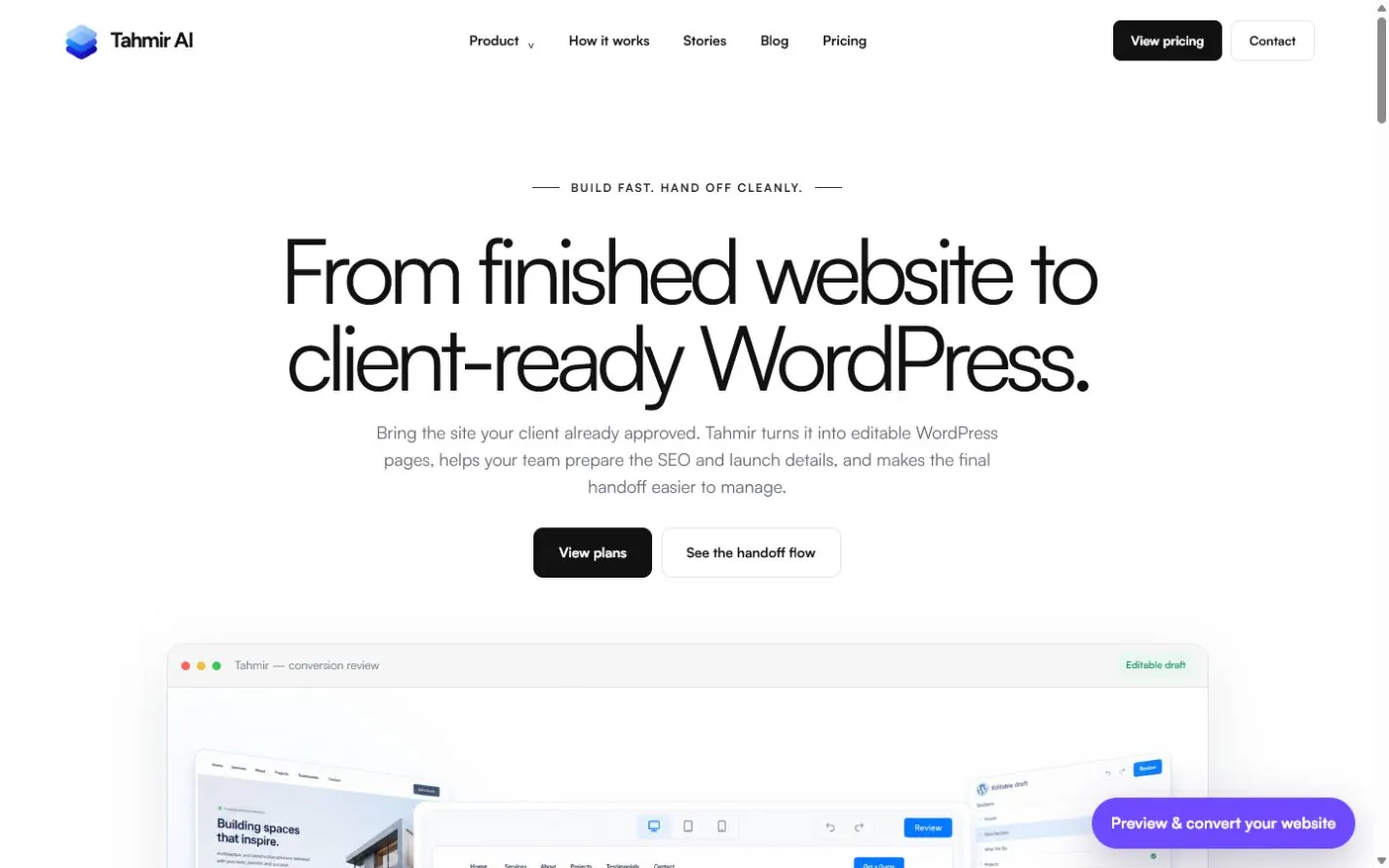
The real Tahmir AI website explaining its website-to-WordPress workflow

1. We built the partner strategy around moments of existing pain.

Rather than begin with follower count, we mapped the moments when Tahmir becomes immediately relevant. The strongest affiliate conversations happen when someone has already built a page with HTML, an AI frontend tool, Webflow, Framer, or a ZIP export—and then discovers that the client still expects WordPress ownership.

The priority partner groups followed from those moments:

  • AI website educators whose audiences create pages quickly but still need a production and handoff path.
  • WordPress creators and implementers who can explain editability, plugins, SEO controls, forms, and client maintenance.
  • Freelance and agency educators teaching faster delivery, better margins, and safer client handoff.
  • No-code and frontend reviewers whose audience needs a bridge from prototype or export to an owned CMS.
  • Service providers who could introduce Tahmir inside a workflow rather than present it as an isolated tool.

2. We simplified the message affiliates needed to carry.

An affiliate should not need to understand every feature before sharing a product. We organized the story into a short cause-and-effect sequence: your page is already approved → rebuilding it wastes time and introduces drift → Tahmir creates an editable WordPress draft → your team reviews before publishing.

That message gave partners several audience-specific angles without changing the core promise:

  • For agencies: deliver an editable client handoff without manually recreating every section.
  • For freelancers: turn approved AI or static output into a WordPress draft with less repetitive rebuilding.
  • For marketers: keep headings, content, images, links, and forms reviewable inside the CMS.
  • For WordPress professionals: use automation for the draft while preserving human approval before launch.
The affiliate story became specific: do not start over when the page is already approved—move it into WordPress ownership.

3. We reduced the distance from “interested” to “ready to promote.”

Recruitment is wasted if the partner reaches a blank dashboard and an unexplained link. The enablement path was designed around what an educator or service provider needs to publish with confidence: a direct product explanation, source-to-draft workflow, proof points they could inspect, honest limitations, and concrete use cases.

  1. Give context first: define the costly manual workflow Tahmir replaces.
  2. Show the transformation: approved source in, editable WordPress draft out.
  3. Set trust boundaries: human review still covers forms, tracking, permissions, mobile behavior, SEO details, and complex scripts.
  4. Match the angle: supply promotion ideas for the partner’s exact audience instead of one generic swipe file.
  5. Create a next action: move the audience toward testing a representative page or requesting access.

4. We managed activation as a relationship, not a broadcast.

The operating rhythm centered on targeted follow-up, practical campaign prompts, product updates worth sharing, fast clarification, and attention to partners whose audiences matched the product. The aim was not to keep every signup equally busy. It was to help relevant partners produce credible explanations and repeat what worked.

Attribution and campaign review then fed the next round of decisions: which partner types created sales, which explanations moved buyers closer to action, which objections needed better content, and which partners deserved deeper collaboration.

The outcome: more than 1,000 sales through affiliates.

The affiliate channel generated 1,000+ product sales for Tahmir AI. The result came from aligning the partner, the audience problem, and the product story—then supporting the channel after recruitment instead of expecting links to sell themselves.

What made the result possible

High-relevance partner targeting, a teachable product narrative, usable enablement, honest proof, operational follow-through, and a conversion path built around the buyer’s real handoff problem.

Screlio
200+

qualified affiliates assembled for prelaunch

Prelaunch pool outcome supplied for this case study. Partner activation and sales were outside this stated result.

Case 02 / Prelaunch partner acquisition

How Screlio entered prelaunch with a pool of 200+ relevant affiliates.

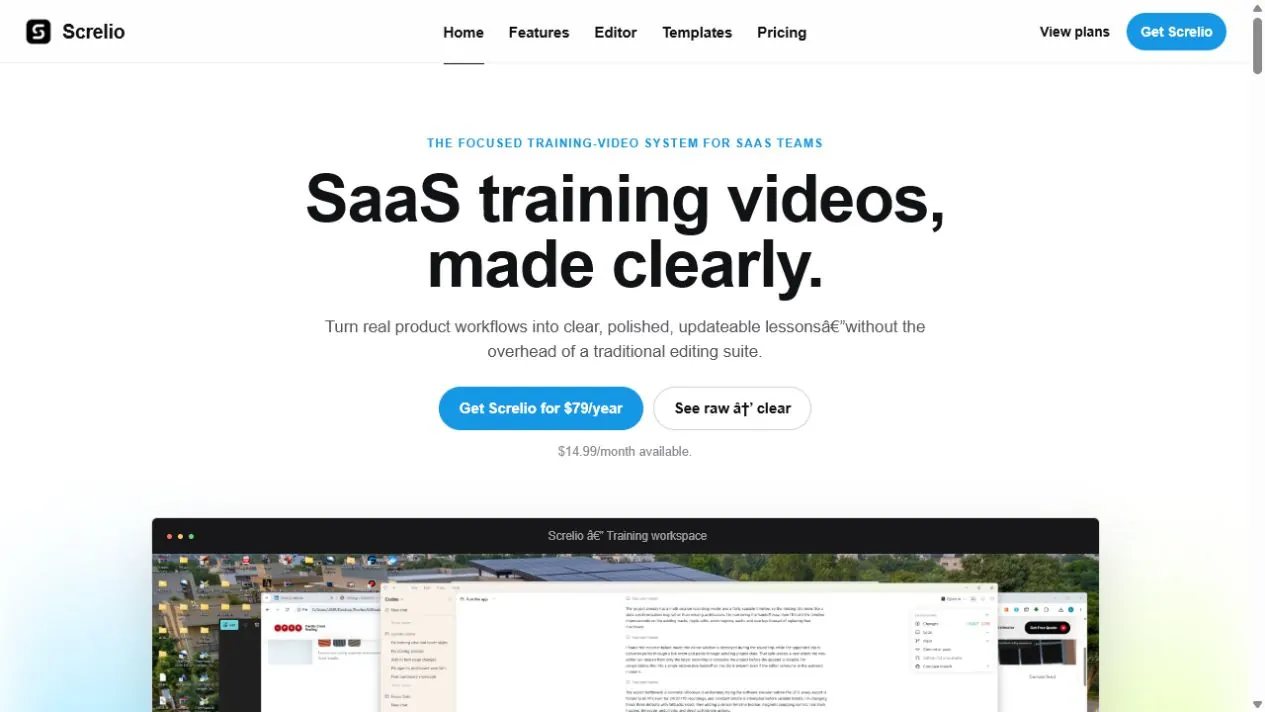
Screlio turns real SaaS product workflows into clear, polished, updateable training videos. Before public launch, it needed more than awareness. It needed a ready audience of partners who already teach software, advise SaaS teams, or influence how product education gets made.

The challenge: prelaunch affiliates were being asked to believe before the market had spoken.

Affiliate recruitment before launch has a different credibility problem. There is less public proof, less mature product content, and no established promotional rhythm. Yet waiting until launch day to begin partner acquisition produces an empty channel precisely when momentum matters most.

Screlio also needed careful positioning. The product is not simply another screen recorder or a broad creative video editor. Its value is the structured teaching layer: turning raw product activity into a lesson with focus, context, pacing, and an updateable workflow. The right affiliates had to understand and care about that distinction.

The real Screlio website explaining its SaaS training-video platform

1. We defined relevance around who already teaches software.

Broad “SaaS influencer” outreach would have created a large but shallow list. We narrowed the partner profile to people whose existing work already included teaching, explaining, onboarding, supporting, reviewing, or implementing software.

  • Customer success and onboarding educators focused on activation, adoption, and time-to-value.
  • SaaS creators and reviewers who routinely demonstrate product workflows to buyers and users.
  • Screen recording and video education specialists able to compare raw capture with teachable output.
  • Product-led growth consultants advising teams on onboarding, self-serve education, and feature adoption.
  • Support and knowledge-base practitioners who feel the cost of repeating the same explanation.
  • Agencies and implementation partners creating product training or handoff content for clients.

2. We gave the prelaunch story one sharp contrast.

The outreach story was organized around a simple truth: a recording shows activity; a lesson creates understanding. That distinction let partners recognize the problem from their own work. Tiny interfaces, wandering cursors, missing context, and one-off videos that age quickly are familiar pain points to anyone teaching software.

From there, the product story could remain concrete: structure the workflow, guide attention, add teaching context, include the instructor when useful, and reopen the lesson when the product changes.

Prelaunch recruitment worked because the message described a problem partners already teach their audiences to solve.

3. We built the pool in layers, not as one undifferentiated list.

Each prospect was assessed against audience relevance, content fit, authority, likely promotion style, and the role they could play during launch. That produced a pool with several useful functions:

  1. Educators who could teach the raw-to-clear transformation.
  2. Reviewers who could demonstrate the editor and compare workflows.
  3. Consultants who could recommend Screlio inside a broader onboarding or enablement system.
  4. Community operators who could introduce the product to concentrated groups of SaaS practitioners.
  5. Service partners who could use Screlio while delivering training work for clients.

This segmentation mattered because a launch email should not ask every partner to do the same thing. A consultant may introduce a use case to clients. A creator may publish a demo. A community lead may host an educational session. The program was designed to support those different paths.

4. We treated prelaunch nurture as part of recruitment.

A prelaunch “yes” can decay quickly if nothing happens afterward. The pool therefore needed a communication path that preserved interest while the product and launch material matured. Partners needed concise product updates, a clear launch expectation, useful demonstrations, and a sense of what would be available when promotion began.

That nurture approach also created an early feedback channel. Questions from prospective affiliates exposed where the product explanation was weak, which comparisons needed clarity, and which use cases felt immediately promotable. Those signals could improve launch messaging before the broader market saw it.

The outcome: a prelaunch pool of more than 200 affiliates.

Grow My Affiliates assembled a 200+ affiliate pool for Screlio before launch. The achievement was not presented as sales; it was the creation of launch-ready distribution potential—relevant partners identified, approached, qualified, and organized around the ways they could credibly bring the product to market.

What made the result possible

A narrow definition of relevance, a clear raw-recording-versus-teachable-lesson story, segmented partner roles, tailored outreach, and ongoing prelaunch communication instead of a one-time recruitment blast.

Your product, your channel

Build the affiliate engine your growth stage actually needs.

Sales activation, prelaunch recruitment, or a quiet program that needs rebuilding—we start with the job, not a template.